



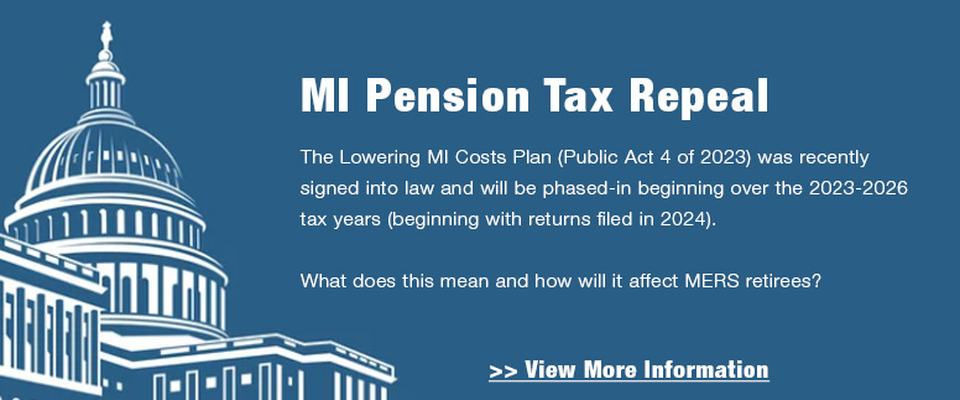



Frontpage Slideshow (version 2.0.0) - Copyright © 2006-2008 by JoomlaWorks

Gov. Snyder Extends EVIP Deadline

Last-minute bill pushes date back to June 1 — and makes major requirement changes

Editor's note: This is an updated version of the original article from the May 4, 2012 Employer Bulletin, expanding on the specific requirements to meet EVIP guidelines.

May 14, 2012 — In a surprising move, Gov. Rick Snyder signed HB 5189 May 1, 2012, which not only changes the deadline to qualify for the final 1/3 of the 2011 Economic Vitality Incentive Program (EVIP) revenue sharing, but also greatly reduces the requirements municipalities need to qualify.

The deadline to qualify for the final 1/3 of your municipality's 2011 EVIP revenue sharing payments is now June 1, 2012. The bill also includes several important changes to the EVIP requirements governing employee compensation. Municipalities must only show a plan and their intent to comply with the new requirements.

To meet the requirements, municipalities can now choose either:

  • The pension reform requirements found in the current EVIP, which include:
    • All new and amended collective bargaining and all other employee agreements to include possible reductions in defined benefit pension multipliers.
    • Limiting FAC calculations at 240 hours of unused leave time (with no overtime allowed) and an FAC calculation period of at least three years.
    • For new hires, limiting on the percentage of payroll that an employer can expend on pension benefits at 10% for employees that are eligible for Social Security and 16.2% for employees that are not eligible.

OR  

  • File a statement of compliance with the requirements of PA 152, legislation that requires an employee/employer cost sharing of health care insurance costs. PA 152 offers an employer three choices:
    • Adopt an employee contribution that is a set financial hard cap
    • Adopt an 80% employer, 20% employee cost sharing
    • Opt out of the requirements of PA 152, if they are eligible to do so, which they can do on an annual basis by a 2/3 vote of the governing body and approval of the chief executive officer of the community.

Unlike the previous EVIP language, the new requirements take effect for the current fiscal year, not just the 2013 fiscal year.

There are also some major changes proposed to the EVIP legislation for the 2012-2013 year. We've outlined the language Gov. Rick Snyder recommended on our website here.

Contact a member of your MERS Regional Team for more information about EVIP, visit our Legislative website here, or the Michigan Treasury Department's website here. You can also download the one-page form here.
 
EVIP Could Undergo Overhaul

Major changes proposed to legislation language

April 4, 2012 — Local units of government could see drastic changes in the requirements for receiving state funding through the Economic Vitality Incentive Program (EVIP) for fiscal year 2012 – 2013.
New budget language establishing the requirements for EVIP was reported by both the Senate and House General Government Subcommittees this week, and though very different from each other both made drastic changes to the program.

The Legislature could choose to adopt the Senate language, the House language or a combination of the two bills. Combining the language is the most likely option and could result in the 2012 – 2013 EVIP requirements being drastically different, or they could end up being a mirror image of what was required this year.

The current EVIP requirements are listed below along with Governor Rick Snyder's recommended changes to the program and includes the Senate and House subcommittee recommendations.

Here's a look at some of the proposed changes:

Read more...
 
MERS of Michigan Outperforms Peers for 2011

Total Market Fund beats benchmark in unsteady market

Feb. 28, 2012 —During an unsteady year in the markets, the Municipal Employees’ Retirement System (MERS) of Michigan fared better than most of its peers in 2011.

MERS Total Market Fund returned 2.30% for the year, outperforming its policy benchmark (the external fund used for comparison) by 1.33%. More tellingly, the MERS fund finished 2011 in the top 18% of its peers, which includes the country’s top 57 pension systems of more than $1 billion.

To read the full press release, please click here.


Pension Reporting Ready for Changes
GASB proposes setting new reporting and accounting standards for liability

Feb. 22, 2012 — After years in the making, some dramatic changes may be coming to the way you report your municipality’s pension liabilities.

The Government Accounting Standards Board (GASB), an independent, private sector, not-for-profit organization that sets standards for financial accounting and reporting, has proposed changes in accounting rules for local governments that provide pension benefits.

Read more...
 
House Approves Road Commission Package

Bills would give county boards ability to assume road commission role

Feb. 13, 2012 — In a surprising move, the House of Representatives voted Feb. 7 to approve House Bills 5125 (Switalski, D-Warren) and 5126 (Zorn, R-Ida), which allow a county board of commissioners to assume management authority from a board of road commissioners. The House had previously blocked passage of the bills, because they don’t require a vote of the people. However, the bills do require public hearings to be held before any such action by a board.

Read more...
 
2011 - The Legislative Year In Review

Jan. 12, 2012 — Shortly after 9 p.m. on Thursday, December 15, 2011, the legislature wrapped up its work and adjourned until mid-January. Thus ended one of the most active legislative sessions in recent years, one hailed as historic by Republican leadership and a disastrous by the leadership of the Democratic caucus.

Here’s a look at the legislation passed in 2011, and what’s to come for 2012:

Read more...
 
State Senate Puts Roadblock on Road Commission Reform

Senate committee wants to authorize voters to transfer control to county boards

Dec. 19, 2011 — Legislative action before the holiday break resulted in drastic changes in House Bill 5125 (Rep. Jon Switalski, D-Warren) and House Bill 5126 (Rep. Dale Zorn, R-Ida), part of the road commission reform package.

The Senate Transportation Committee amended the bills, adding the requirement that a county board of commissioners could only assume the duties of a board of road commissioners (either an elected or appointed board) after the approval by a vote of county residents. The Senate passed the bills as amended, while the House of Representatives then rejected the change, creating a stalemate.

The legislature adjourned for the year without passing the legislation. It is likely the issue will resurface when the legislature returns for the 2012 session in early January.

The Michigan House of Representatives passed two series of bills Nov. 30 that would have granted some county boards the powers of county road commissions, House Bills 4029, 4030, 4031 (Rep. Wayne Schmidt, R-Traverse City), and House Bills 5125 and 5126.

At the present time, only the Wayne and Macomb county boards of commissioners control the powers and duties that are normally reserved for the county road commissioners. In most cases, transferring those duties to the county board of commissioners can only be done by a vote of the electorate in a county.

The concept of allowing the transfer of control by simply passing a resolution by the county board of commissioners was suggested by Governor Rick Snyder as part of his transportation reform proposal.

Stay tuned to this site for further updates.


State House Paves Way for Road Commission Reform
Two packages of bills head to Senate that could transfer control to county boards

Dec. 9, 2011 — The Michigan House of Representatives passed two series of bills Nov. 30 that would grant some county boards the powers of county road commissions.

House Bills 4029, 4030, 4031 (Rep. Wayne Schmidt, R-Traverse City), House Bill 5125 (Rep. Jon Switalski, D-Warren) and House Bill 5126 (Rep. Dale Zorn, R-Ida) were sent to the Senate for their consideration.

HB 4029–4031 would allow the establishment of single-member county road commission districts, while HB 5125–5126 would pave the way for a county board of commissioners to pass resolutions to assume the powers and duties of a board of county road commissioners.

At the present time, only the Wayne and Macomb county boards of commissioners control the powers and duties that are normally reserved for the county board of road commissioners. In most cases, transferring those duties to the county board of commissioners can only be done by a vote of the electorate in a county.

Governor Rick Snyder — as part of his transportation reform proposals — originally suggested this concept.

The Senate is expected to begin consideration of the package in the near future.


MERS Investment Menu Offers New Funds

Upgrades for MERS Defined Contribution Plan, MERS Hybrid Plan, and MERS Health Care Savings Program participants

Dec. 1, 2011 — Improvements have been made to the MERS Investment Menu, which means participants of the MERS Defined Contribution Plan, the MERS Hybrid Plan and the MERS Health Care Savings Program will notice some new funds to choose from.

MERS Health Care Savings Program participants can look for informational packets in the mail this December, which will include the new Understanding the MERS Investment Menu book and MERS Health Care Savings Program Handbook. Employees in the MERS Defined Contribution Plan and MERS Hybrid Plan will notice only minor changes to their fund lineup, which is available here.

We’ve also updated the respective Enrollment Kits for each of these programs. Employers can download the new enrollment kits in the Employer Portal. For more information or to request new printed kits for your municipality, please call us at 800.767.2308.


Court Rules Pension Tax Constitutional
Michigan Supreme Court’s split decision hands Gov. Snyder landmark victory

Nov. 22, 2011 — The state pension tax got a governmental green light Nov. 18 — at least most of it.
In a split 4-3 decision, the Michigan Supreme Court ruled that the legislature has the constitutional right to impose an income tax on public pensions, as outlined in PA 38. This means any MERS retiree born on or after Jan. 1, 1946 must pay 4.35% state tax on their pensions starting Jan. 1, 2012. We will send retirees letters with more information soon.

While the court cleared the way for the tax in general, in another decision, the court ruled unanimously that the provision in PA 38 basing a pensioner’s eligibility for exemptions and deductions on the basis of a pensioner’s “total household resources” violates Michigan’s ban on a graduated income tax, and is unconstitutional. The act would have phased down certain tax exemptions for taxpayers that had total household resources of more than $75,000 for single and $150,000 for joint filers.

The court said the bill can be made constitutional simply by deleting the portion of the bill dealing with total household resources. The court also ruled unanimously that using a pensioner’s date of birth as a basis of eligibility for income tax exemptions did not violate either the state or federal constitution.

The ruling is a huge victory for Governor Rick Snyder, but it may create some legislative issues because

Read more...
 
MERS Legislative Guidelines Available Online

Read the report outlining the direction for our legislative efforts

Nov. 21, 2011 — Have you wondered how MERS determines which pieces of legislation to respond to? Wondered about how we react to important issues, and what that means for our members? Wonder no more.

These Legislative Guidelines have been developed to provide a transparent view of MERS objectives when supporting, opposing or remaining neutral on proposed legislation.
Click here to read the guidelines.


Seeing ‘MERS foreclosures’ in the news? It’s not your MERS pension plan!

Nov. 18, 2011 — Have you been reading about MERS foreclosures and Supreme Court rulings in the news? Unfortunately, it's a common headline nowadays.

If you're wondering what your retirement system is doing handling foreclosures, we have an easy explanation:

It's not us.

It’s an easy mistake to make, of course. But the MERS the articles refer to is actually the Mortgage Electronic Registration System (of Virginia), which is also abbreviated as "MERS." That service is a prominent foreclosure filer whose name appears in a large percentage of mortgage foreclosures nationally.

While your MERS, the Municipal Employees' Retirement System of Michigan, does own real estate, we have no mortgage debt and any taxes that may be owed are paid when due. So there's no connection to the foreclosure notices and the Municipal Employees' Retirement System.

It's a classic case of right acronym, wrong organization.


You Ask, We Answer

MERS Legislative Team responds to Annual Meeting questions

Nov. 10, 2011 — At MERS Annual Meeting, members raised a number of questions about legislation — both enacted and pending. The answers required additional research and/or clarification. The questions are listed below, along with answers or updates on tracking down the answers.

  1. What, if any, will be the effect on municipalities of the recently approved 1% health care excise tax?

    The excise tax was implemented by 2011 PA 144 (HB 4734) to replace the “QAAP Tax” (Quality Assurance Assessment Program) that was paid by hospitals, nursing homes, HMOs, and some prepaid inpatient health plans. The tax was used by the state to increase the amount of Medicaid reimbursements to those groups and the state for services provided under the Medicaid program.

    The federal government will no longer allow programs like the QAAP Tax to be used for local Medicaid matching funds, so the state had to find another source of revenue or risk losing considerable federal funding in the Medicaid program.
Read more...
 
Legislature Looking at Local Governments
Retiree health care reform, property tax amendments on agenda

Nov. 3, 2011 — As the Legislature shifts its attention back to the interests of local governments, the House Appropriations Committee reported HB 4701 (Rogers, R-Brighton), legislation that would amend that state employee pension system (SERS) as follows: 

  • Eliminate the current 3% employee contribution to retiree health care, which was recently found unconstitutional by the Michigan Court of Appeals
  • Require employees that choose to remain in the SERS defined contribution pension plan contribute 4% of pay
  • Eliminate retiree health care for all new employees  and establish a health care trust account for those employees
  • Exclude overtime pay from the definition of compensation for the purpose of pension calculations

The House of Representatives has started debate on HB 4701  and it is almost certain that some form of post retirement health care reform will pass the legislature. The bill will have no effect on local units of government. However, MERS is monitoring the legislation because the administration has made it clear that reforms to both the school employees and municipal systems are agenda items.

Read more...


Site last updated:Wednesday, 09 May 2012

© 2012 Welcome to the Municipal Employees' Retirement System